Why Did America’s Top General Turn Against Aaron Burr in 1806?
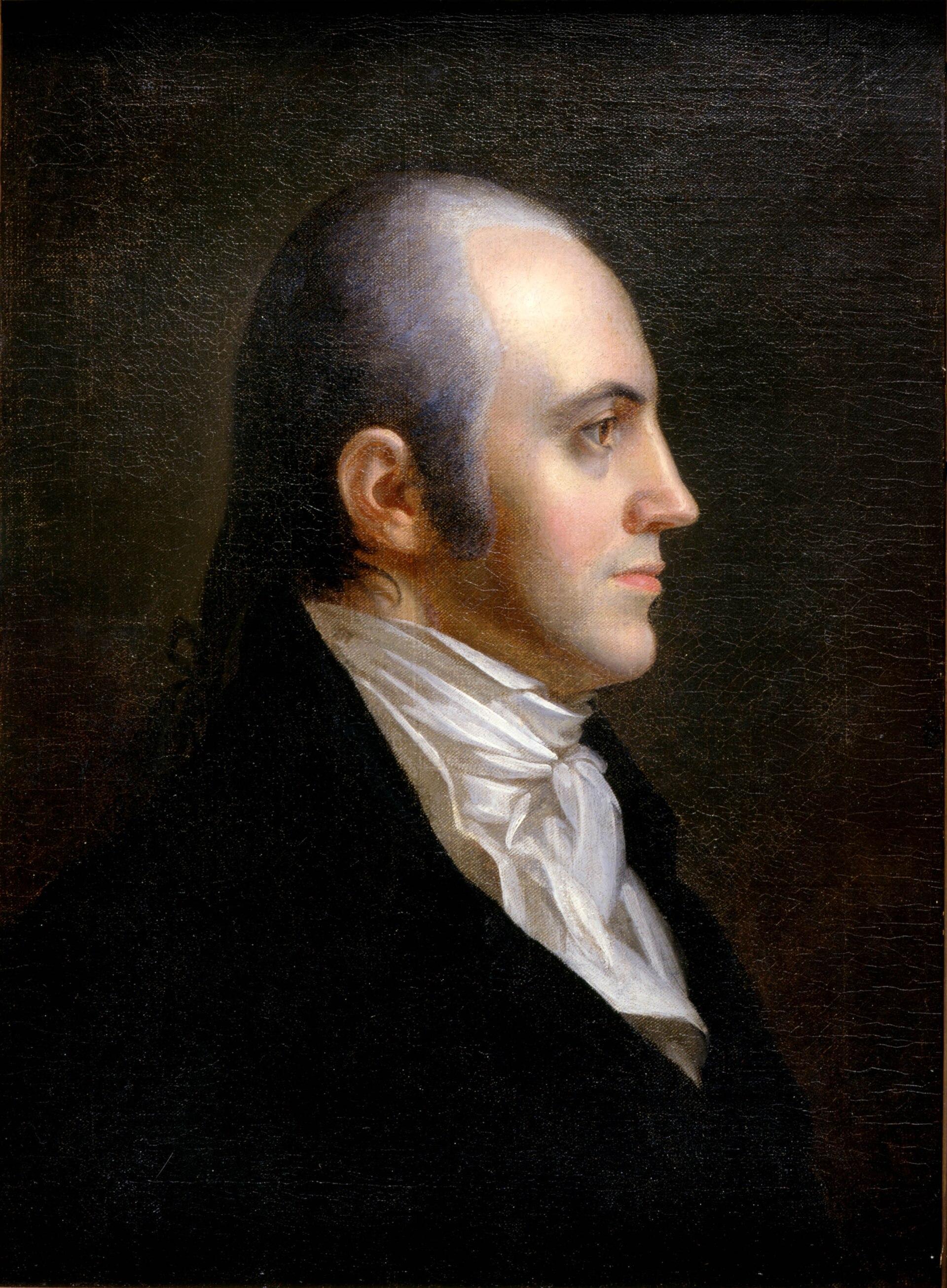
In August 1804, Britain’s minister to the United States, Anthony Merry, reported that sitting Vice President Aaron Burr had offered to help detach the western part of the country.
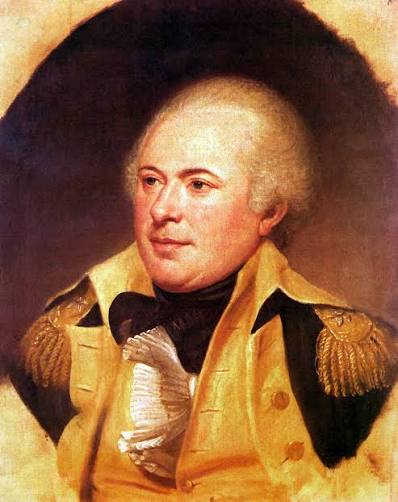
Why did Brigadier General James Wilkinson turn against Aaron Burr, who had been counting on him as an ally?
Natchitoches, October 8, 1806 — A courier named Samuel Swartwout delivered a coded letter to Brigadier General James Wilkinson, the U.S. Army’s senior officer. The letter, which came from former Vice President Aaron Burr’s circle, claimed that money had been secured and preparations were underway. It placed Wilkinson second only to Burr, though how far the general had actually committed himself remains uncertain.
Thirteen days later, Wilkinson dated a warning to President Thomas Jefferson. The warning came well before the December gathering that would become the focus of Burr’s treason trial. And when Wilkinson eventually sent Jefferson a decoded version of the letter, it was missing the first sentence.
What Burr was offering
Burr’s political prospects had narrowed while he was still vice president. In February 1804, the Democratic-Republican members of Congress chose New York Governor George Clinton as Jefferson’s next running mate. Burr ran for governor of New York that April and lost to Morgan Lewis.
In July, Burr shot Alexander Hamilton in a duel in Weehawken, New Jersey. Hamilton died the next day, and Burr was indicted for murder in New York and New Jersey. The charges were eventually dropped, but the duel and the election defeat had badly damaged his political prospects.
Burr stayed in office until March 1805, and he was already sounding out Britain about the West. According to British minister Anthony Merry, Burr offered in August 1804 to help separate the western part of the United States. After Burr left office, Merry reported a more specific request: a $500,000 loan and a British naval squadron at the mouth of the Mississippi. That was what Burr sought, not what Britain agreed to provide.
Burr traveled down the Ohio and Mississippi rivers in 1805, sounding out supporters. Different people came away with different accounts of his plans. Jefferson later alleged that Burr aimed to attack Spanish-ruled Mexico, split the Union along the Alleghenies, or do both, and that Burr meant to head the new state. Settlement on the Ouachita River was another possibility: Jefferson called it a cover, but it may have been a fallback if war with Spain did not break out.
Why Wilkinson turned
Whatever Burr intended, Wilkinson was a valuable prospective ally. He commanded western troops and governed Louisiana Territory from St. Louis. He was also on Spain’s payroll as a secret agent known as Agent 13, even as he held the senior post in the U.S. Army.
Self-preservation is a strong explanation for why Wilkinson turned on Burr. Secretary of War Henry Dearborn had warned him to steer clear of Burr as the venture lost support. By warning Jefferson, Wilkinson could distance himself from the expedition and take credit for exposing it. His exact motives remain unsettled, but the sentence he removed from the decoded letter referred to earlier correspondence with him.
Jefferson received Wilkinson’s first warning on November 25 and issued a proclamation two days later against an expedition targeting Spanish possessions, without naming Burr. Wilkinson sent the altered decipherment separately in December. Jefferson later praised him as a loyal officer, but that tells us how the president regarded him, not why Wilkinson acted.
The island and the courtroom
By the time Burr’s supporters gathered at the Ohio River estate of Harman and Margaret Blennerhassett, Wilkinson had already warned Jefferson. On December 10, 1806, Harman Blennerhassett and about 30 men slipped away in four boats. The local militia arrived the next day. Burr had visited the island earlier that year, but he wasn’t there for the December gathering.
The coded letter helped drive the prosecution, but it did not establish treason. Its authorship is disputed: no copy in Burr’s handwriting survives, and the Federal Judicial Center identifies former House Speaker Jonathan Dayton as the likely author of the version Wilkinson received. More important at trial, the indictment accused Burr of personally levying war at the island gathering, not merely of making plans elsewhere.
In Richmond, Virginia, Chief Justice John Marshall ruled on August 31, 1807, that evidence of Burr’s plans elsewhere could not prove the specific act charged. Unless the accused confessed in open court, the Constitution required two witnesses to the same overt act, meaning the deed alleged to amount to treason. Burr’s absence from the island mattered more to that charge than the ambitions his accusers attributed to him.
The jury acquitted Burr on September 1, 1807. The verdict settled the treason charge without settling what Burr meant to do in the West. And although Wilkinson admitted deleting the opening sentence, knowing what he chose to hide still doesn’t tell us everything about why he turned on Burr.
The short answer
Self-preservation is a strong explanation, though Wilkinson’s exact motives remain uncertain. As Burr’s venture lost support, Wilkinson warned Jefferson and later sent him a decoded letter that omitted a reference to Wilkinson’s own earlier correspondence.
Timeline
- February 1804The Democratic-Republican congressional caucus chooses George Clinton, not Burr, as Jefferson’s running mate.
- August 1804British minister Anthony Merry reports that Burr offered to help detach the western part of the United States.
- October 8, 1806Samuel Swartwout delivers a coded letter from Burr’s circle to Wilkinson at Natchitoches.
- October 21, 1806Wilkinson dates his first warning to Jefferson.
- December 10, 1806Harman Blennerhassett and about 30 men leave the island in four boats. Burr is not there.
- December 14, 1806Wilkinson sends Jefferson an altered decipherment of the coded letter with a letter of this date.
- August 31, 1807Chief Justice John Marshall rules that evidence about Burr’s plans elsewhere cannot prove the act charged at the island.
- September 1, 1807The jury acquits Burr of treason.
Key people
- Aaron BurrFormer vice president and organizer of the western expedition
- James WilkinsonSenior U.S. Army officer and paid Spanish agent
- Thomas JeffersonPresident who received Wilkinson’s warning
- Anthony MerryBritish minister who reported Burr’s overtures
- Harman BlennerhassettBurr supporter and co-owner of the Ohio River estate
- John MarshallChief justice who presided over Burr’s treason trial
Sources
- Aaron Burr (1756–1836) title QS:P1476,en:"Aaron Burr (1756–1836) " label QS:Len,"Aaron Burr (1756–1836) " by John Vanderlyn (1802 date QS:P571,+1802-00-00T00:00:00Z/)
- Aaron Burr 1803 Painting (cropped) by John Vanderlyn (circa 1803 date QS:P,+1803-00-00T00:00:0)
- Rembrandt Peale - Thomas Jefferson title QS:P1476,en:"Rembrandt Peale - Thomas Jefferson " label QS:Len,"Rembrandt Peale - Thomas Jefferson " label QS:Lbn,"টমাস জেফারসন" label QS:Lru,"Томас Джефферсон" label QS:Lde,"Thomas Jefferson" by Rembrandt Peale (1800)
- Duel between Aaron Burr and Alexander Hamilton by Internet Archive Book Images (1901)
- Aaron Burr post-failure by John Vanderlyn (circa 1803 date QS:P,+1803-00-00T00:00:0)
- Anthony Merry - Gilbert Stuart 1805 (Park 547) by Gilbert Stuart (1805)
- Lloyd's map of the lower Mississippi River from St
- Carte Du Mexique et des Pays Limitrophes Situes Au Nord et a l'est Dressee d'apres la Grande Carte de la Nouvelle Espagne De Mr
- Geography 028 - Map of the Louisiana Purchase - 1803 by BioKnowlogy (2023-02-13 07:23:06)
- James Wilkinson by Charles Willson Peale (1797 date QS:P571,+1797-00-00T00:00:00Z/)
- James Wilkinson by John Wesley Jarvis by John Wesley Jarvis (5 April 2012)
- Gen
- Har
- John Marshall
- 1 Aaron Burr, fugitive and traitor, 1804 Introdu
Further reading
- American Emperor: Aaron Burr's Challenge to Jefferson's America by David O. Stewart