Why Did Thomas Jefferson Wait to Move Publicly Against Aaron Burr?
The general whose warning prompted President Thomas Jefferson to move publicly against Aaron Burr was secretly on Spain’s payroll.
Why did President Thomas Jefferson investigate former Vice President Aaron Burr in private for months before moving publicly against his expedition?
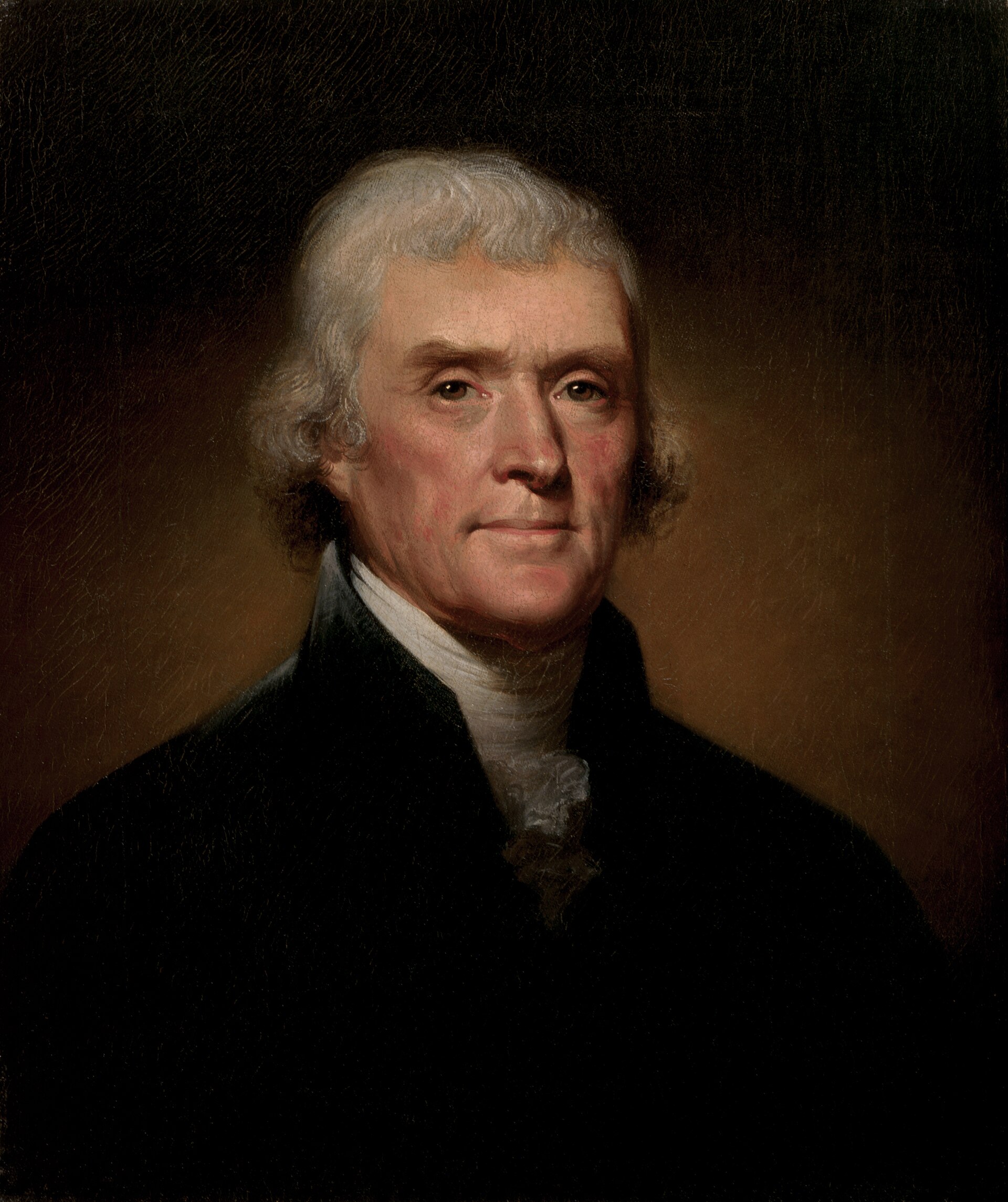
November 25, 1806 — A dispatch from General James Wilkinson, the Army’s ranking officer, reached President Thomas Jefferson. Wilkinson warned that thousands of men would assemble at New Orleans, but his written warning did not name former Vice President Aaron Burr. Jefferson met with his Cabinet that day. Two days later, he issued a proclamation ordering an unauthorized expedition against Spanish territory to stop, and he didn’t name Burr either.
That proclamation can make it look as though Jefferson had spent nearly a year doing nothing. But November was when he went public, not when he began investigating. To see why that distinction matters, go back to the first reports, when even the people raising the alarm couldn’t agree on what Burr was up to.
Plenty of warnings, no clear target
After leaving the vice presidency in March 1805, Burr traveled down the Ohio and Mississippi to New Orleans and back, sounding out leading politicians. Preparations continued in 1806: financial backer Harman Blennerhassett helped fund the enterprise, and Burr engaged boatbuilders near Marietta, Ohio, to build 15 boats. Boats were something an investigator could count. They couldn’t tell him where Burr intended to take them.
Anonymous warnings about Burr’s western plans reached Jefferson in late 1805. Then Joseph Hamilton Daveiss, the U.S. district attorney for Kentucky, began writing to the president. In July 1806, Daveiss described a reported scheme to stir revolt in Spanish provinces and split the western states and territories from the Union, combining them under one government. Even Daveiss allowed that the affair might be a swindle.
Daveiss was a Federalist, and Burr had been Jefferson’s Democratic-Republican vice president. But the record doesn’t show Jefferson dismissing the warnings as partisan. In February, he told Daveiss he had shared the first warning with three members of his Cabinet and asked for names and fuller information. In September he acknowledged the later letters and promised confidentiality.
By October, the reports were multiplying without settling the question. General William Eaton said Burr had tried to recruit him, and other accounts came from near Pittsburgh, New York, and the West. One correspondent suspected Florida; Wilkinson’s later dispatch pointed to Veracruz. Jefferson would eventually allege that Burr meant to seize New Orleans before moving against Mexico and had considered western secession, but historians still disagree about Burr’s ultimate objective and how his plans changed.
What Jefferson needed before an arrest
Jefferson waited to act publicly because the early reports were inconclusive and the legal course was uncertain. His Cabinet’s October 22 notes made arrest contingent on a clear overt act—something Burr or his supporters had actually done, not just something they were reported to be planning. The administration could investigate before it had enough evidence for an arrest, and it did.
In late October, Jefferson sent John Graham west as a confidential investigator. Graham was to look into the reports, alert governors in person, and arrange an arrest if the evidence warranted it. By the time Wilkinson’s dispatch arrived on November 25, that inquiry was already underway. The dispatch was the immediate trigger for the public proclamation, not the start of the government’s response.
The November 27 proclamation ordered participants to desist and directed civil and military officials to stop the expedition by lawful means, including seizing vessels, arms, and supplies. Its stated target was an unauthorized expedition against Spanish territory, not a plot to break up the Union. It was an order to stop an expedition, not a public accusation of treason against Burr.
The general who sounded the alarm
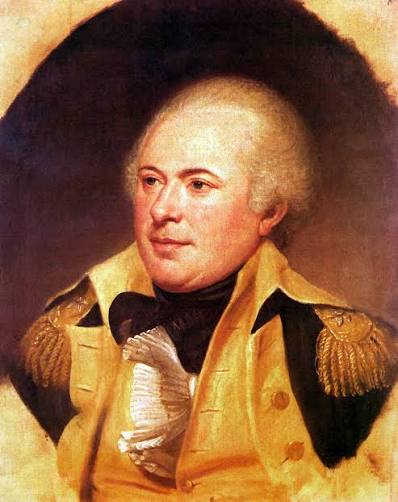
Wilkinson was an unlikely source for the warning. Besides being the Army’s senior officer, he was governor of the Territory of Louisiana, administered from St. Louis and separate from the Territory of Orleans, which included New Orleans. There is good evidence that he and Burr had cooperated: Burr’s associate Justus Erich Bollmann told the administration that Burr believed Wilkinson had pledged to join him. The precise terms of any agreement remain uncertain.
Jefferson publicly named Burr in a January 22, 1807, message to Congress. He reported conflicting estimates of 100 to 300 people and five to 15 boats passing the Falls of the Ohio. Those figures described one group, not the whole expedition; Wilkinson’s earlier forecast of 8,000 to 10,000 men at New Orleans was an allegation, not a head count. Burr was acquitted of treason on September 1, 1807.
The man whose warning pushed Jefferson to go public had a secret the president didn’t know. Wilkinson, the senior officer of the United States Army, had sworn allegiance to Spain in 1787 and was secretly on its payroll. In Spanish communications, he was known as Agent 13.
The short answer
Jefferson asked for more information in February 1806 and sent a confidential investigator west in late October, but the early reports were inconclusive and his Cabinet wanted evidence of a clear act before making an arrest. Wilkinson’s warning, received November 25, prompted the November 27 public proclamation, which stopped short of naming Burr.
Timeline
- March 2, 1805Aaron Burr gives his Senate farewell before leaving the vice presidency.
- February 15, 1806Jefferson tells Joseph Hamilton Daveiss he shared the first warning with Cabinet members and asks for fuller information.
- July 14, 1806Daveiss reports an alleged scheme to stir revolt in Spanish provinces and separate the American West from the Union.
- Late October 1806Jefferson sends John Graham west to investigate confidentially and alert governors.
- November 25, 1806Jefferson receives Wilkinson’s dispatch and meets with his Cabinet.
- November 27, 1806Jefferson issues a proclamation ordering officials to stop an unauthorized expedition against Spanish territory, without naming Burr.
- January 22, 1807Jefferson publicly names Burr in a message to Congress.
- September 1, 1807Burr is acquitted of treason.
Key people
- Thomas JeffersonU.S. president who investigated Burr’s plans and issued the proclamation
- Aaron BurrFormer vice president who organized the western expedition
- James WilkinsonArmy’s ranking officer, governor of the Territory of Louisiana, and secret agent of Spain
- Joseph Hamilton DaveissU.S. district attorney for Kentucky who repeatedly warned Jefferson
- John GrahamConfidential investigator sent west by Jefferson
Sources
- Rembrandt Peale - Thomas Jefferson title QS:P1476,en:"Rembrandt Peale - Thomas Jefferson " label QS:Len,"Rembrandt Peale - Thomas Jefferson " label QS:Lbn,"টমাস জেফারসন" label QS:Lru,"Томас Джефферсон" label QS:Lde,"Thomas Jefferson" by Rembrandt Peale (1800)
- Aaron Burr (1756–1836) title QS:P1476,en:"Aaron Burr (1756–1836) " label QS:Len,"Aaron Burr (1756–1836) " by John Vanderlyn (1802 date QS:P571,+1802-00-00T00:00:00Z/)
- James Wilkinson by Charles Willson Peale (1797 date QS:P571,+1797-00-00T00:00:00Z/)
- A New Map of Part of the United States of North America, Containing the Carolinas and Georgia, also the Floridas and Part of the Bahama Islands &c
- Portrait of Joseph Hamilton Daveiss (1928) by Unknown author Unknown author (1928-06-15)
- Aaron Burr 1803 Painting (cropped) by John Vanderlyn (circa 1803 date QS:P,+1803-00-00T00:00:0)
- William Eaton by Navy (1940)
- Aaron Burr's strategim at the Weeks (i
- Mapa Virreinato Nueva España de Pensacola a Veracruz, de Janos a Sinaloa by Juan de Olivan Rebolledo (1717-12-18)
- Map of the Louisiana Purchase Territory by Unknown author Unknown author or not provided (1903 date QS:P571,+1903-00-00T00:00:00Z/)
- Thomas Jefferson, third president of the United States LCCN2017660716 by Pendleton's Lithography
- James Wilkinson by John Wesley Jarvis by John Wesley Jarvis (5 April 2012)
- Gen
- From Thomas Jefferson to Joseph Hamilton Daveiss, 15 February 1806
- Anonymous to Thomas Jefferson, December 5, 1805
Further reading
- The Burr Conspiracy: Uncovering the Story of an Early American Crisis by James E. Lewis Jr.. Explores how Americans made sense of the affair as conflicting accounts circulated.