Why Did Britain Hold New York City for Seven Years... and Leave So Late?
More than two years after the British surrender at Yorktown, British troops still held New York City.
Why did Britain hold New York City for seven years, even after the last major battle of the Revolution?
New York City, November 25, 1783 - Patriots lined the streets, waved American flags, and cheered as General George Washington and New York Governor George Clinton made their formal entry on horseback. The last British troops were leaving the city, not the whole army at once. The evacuation had been underway for months, and even this final handover was two days late: Washington reported to Congress that bad weather had pushed it back from November 23.
How Britain took the city
Congress voted for independence on July 2, 1776, and adopted the Declaration on July 4. Less than two months later, on August 27, British General William Howe’s forces outflanked Washington’s army through Jamaica Pass in what is now Brooklyn. The Battle of Long Island cost the Americans about 300 killed, 650 wounded, and 1,100 captured.
On the night of August 29–30, Washington got roughly 9,000 Continental troops across the East River from Brooklyn to Manhattan. Saving the army was not the same as saving the city. Howe landed at Kip’s Bay on September 15 and took New York City, though American troops held Fort Washington in northern Manhattan until November 16.
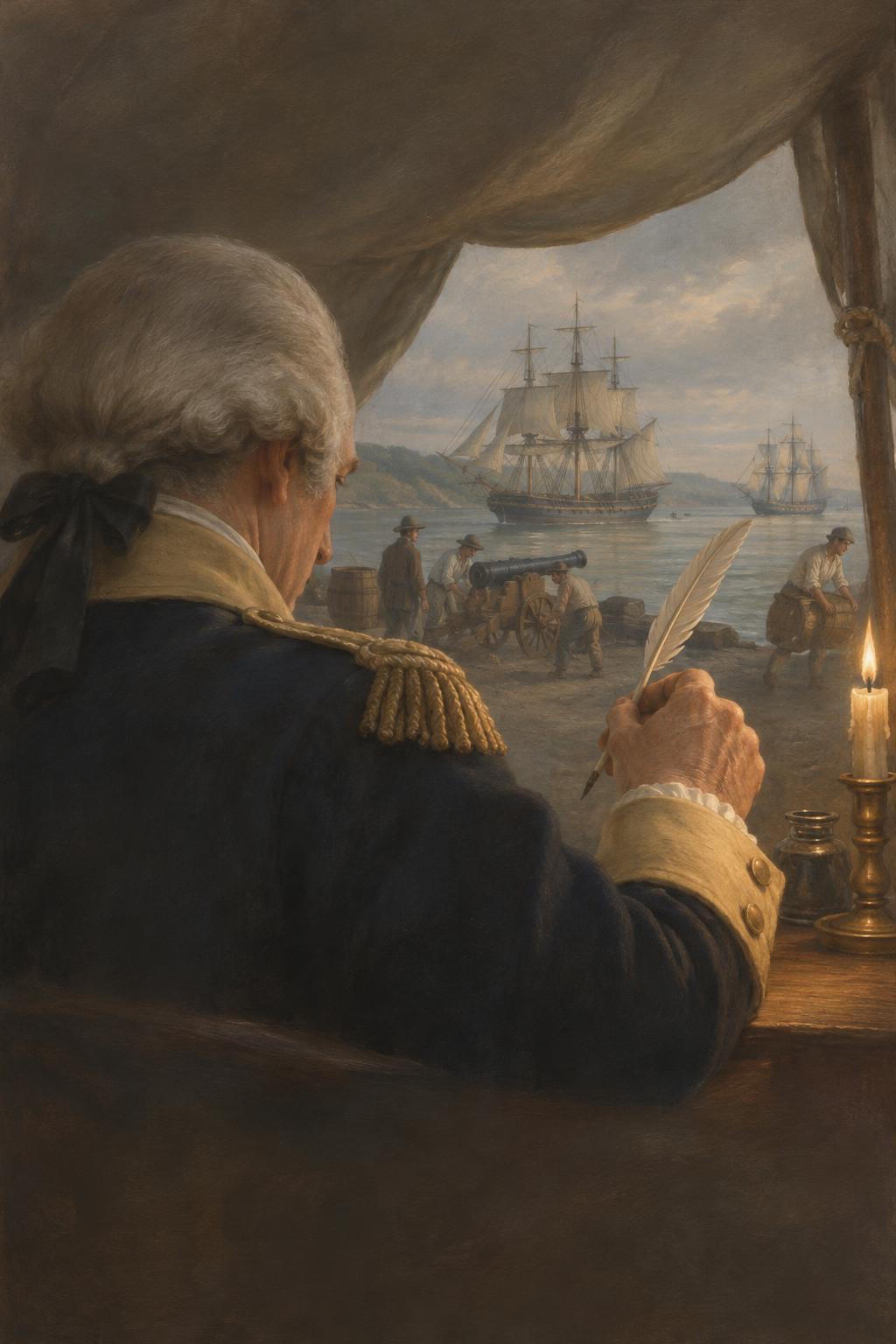
The British made the city their North American headquarters and used its harbor as a supply base. Washington still wanted to retake it in 1781, but when the French fleet headed for the Chesapeake, the allied campaign shifted to Virginia. The allies won at Yorktown. New York City stayed in British hands.
Why Yorktown didn’t empty the harbor
Britain held the city through the war because it was a headquarters and supply base the Americans never recaptured. After Yorktown, getting it back took a negotiated peace and enough ships to carry out the evacuation. The British surrender on October 19, 1781, ended the last major battle, not the war itself.
The preliminary peace articles of November 30, 1782, already recognized American independence and provided for British withdrawal. Congress issued its proclamation ending hostilities on April 11, 1783, and Washington had it announced in the American camp on April 19. By April 24, the British commander, Sir Guy Carleton, reported that most of the shipping available to him was already committed to the evacuation.
When Carleton met with Washington on May 6, he cited a shortage of transport ships and said more than 6,000 people, including Black evacuees, had already sailed. The definitive Treaty of Paris, signed September 3, confirmed independence and required British withdrawal. It did not set the evacuation in motion: people had been leaving for months, and Congress would not ratify the treaty until January 14, 1784, after the city had changed hands.
A city changed by occupation
Thousands of residents had fled as the British attack approached in 1776, before the occupation began. Under British rule, the city took in Loyalist refugees, people who sided with the Crown. A major influx followed the American victory at Saratoga in October 1777.
Thousands of American prisoners were held aboard British ships, with the largest concentration in Wallabout Bay near today’s Brooklyn Navy Yard. At least 16 prison and hospital ships anchored there during the occupation. The most notorious, HMS Jersey, held about 1,200 Americans at a time.
For Patriots who had fled, the handover was also a homecoming. Among the records of November 25 is Washington’s reply to an address from returning New Yorkers. Their return was another kind of reversal, beyond the change of flags and the troops marching in.
The handover and the flagpole
At about one in the afternoon, a Continental detachment under Major General Henry Knox took possession as the British withdrew. An American flag went up and a 13-gun salute sounded while British troops were boarding their ships. Washington and Clinton made their formal entry after American troops took control.
Tradition tells a more dramatic story about the flag-raising at Fort George at the Battery. In that version, the departing British nailed their flag to a greased pole, and Revolutionary War veteran John Jacob Van Arsdale climbed it, pulled down the British flag, and raised the Stars and Stripes. The flag-raising is documented; the sabotage and Van Arsdale’s role are disputed.
James Riker’s 1883 account tells the story but also includes a recollection from artillery officer John Van Dyck that undercuts it. In 1831, Van Dyck recalled standing within two feet of the flagstaff and seeing no British flag to pull down. Whatever happened at the pole, Washington’s entry followed a scheduled military handover, not a victory over grease.
November 25 became Evacuation Day, marked with parades, flag-raisings, and other festivities. The holiday declined after the Civil War, rallied for its centennial in 1883, and had largely faded from public life by 1916. New Yorkers kept the anniversary for more than a century, though they didn’t always celebrate it with the same enthusiasm.
The short answer
Britain captured New York City in 1776 and kept it as its North American headquarters and a supply base the Americans never recaptured. Yorktown ended the last major battle, but withdrawal took a peace agreement and months of evacuation amid a shortage of transport ships. The last British troops left the city on November 25, 1783.
Timeline
- August 27, 1776William Howe’s forces outflank and defeat the Americans at the Battle of Long Island.
- September 15, 1776Howe lands at Kip’s Bay and takes New York City.
- October 19, 1781The British surrender at Yorktown, ending the last major battle but not the war itself.
- November 30, 1782Preliminary peace articles recognize American independence and provide for British withdrawal.
- April 11, 1783Congress issues its proclamation ending hostilities.
- May 6, 1783Carleton tells Washington that more than 6,000 people have already sailed and that transport ships are in short supply.
- September 3, 1783The definitive Treaty of Paris is signed, confirming independence and requiring British withdrawal.
- November 25, 1783The last British troops withdraw from New York City, and Washington and Clinton make their formal entry after American troops take possession.
Key people
- George WashingtonCommander of the Continental Army
- William HoweBritish general who captured New York City
- Sir Guy CarletonBritish commander who oversaw the evacuation
- Henry KnoxMajor general whose Continental detachment took possession of the city
- George ClintonNew York governor who entered the city with Washington
- John Jacob Van ArsdaleRevolutionary War veteran credited in tradition with climbing the flagpole
Sources
- The prison ship "Jersey" - ARW ; P
- " Evacuation Day " and Washington's Triumphal Entry in New York City, Nov
- The Occupied City: New York and the American Revolution | National Endowment for the Humanities
- Entry of George Washington into New York in 1783 – Works – eMuseum
- Declaration of Independence (1776) | National Archives
- Battle of Long Island | George Washington's Mount Vernon
- Battle of Long Island | George Washington's Mount Vernon
- Fear and Danger in New York - Women & the American Story
- Appendix A8: Tier 1 Cultural Resources Appendix
- The Moore House and Articles of Capitulation - Yorktown Battlefield Part of Colonial National Historical Park (U.S. National Park Service)
- Milestones in the History of U.S. Foreign Relations - Office of the Historian
- Columbia University Libraries: The iconography of Manhattan Island 1498-1909 (v. 1)
- Fall 2010, Volume 10, Number 2 :: New York State Archives Partnership Trust